
Behavioural Risk
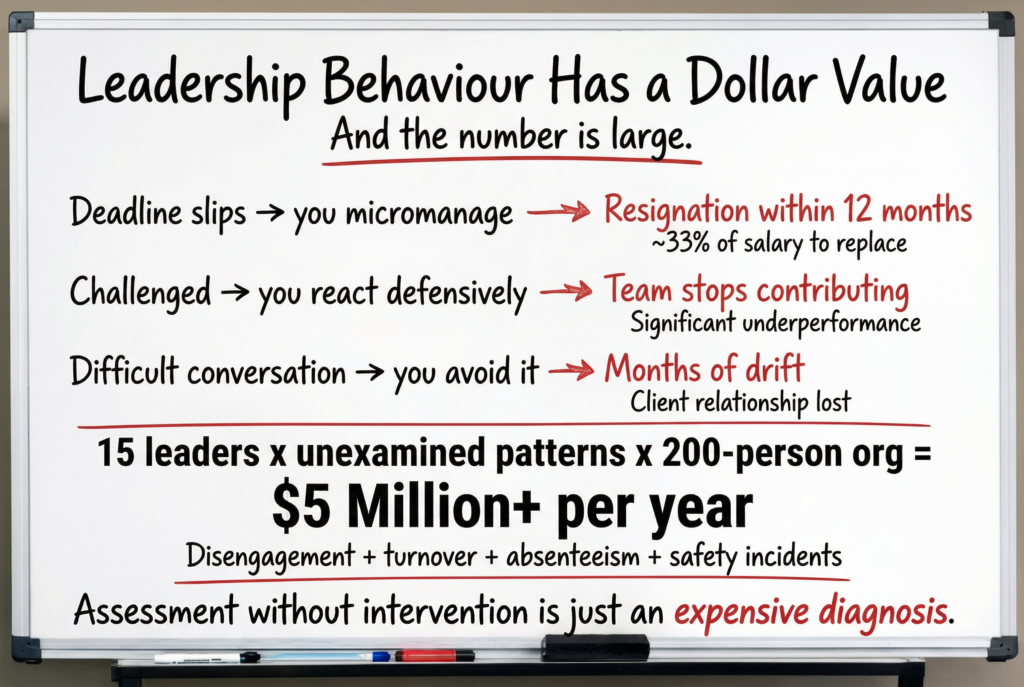
Most organisations treat leadership development as a growth investment – a “nice to have” for high-potential talent. But the evidence is clear: poor leadership behaviour is one of the most significant and undermanaged risks in any organisation.
It drives disengagement, which costs Australian businesses an estimated $211 billion per year. It drives turnover, with research consistently showing that people don’t leave companies – they leave managers. It drives psychological harm, which is now a recognised regulatory risk under Australian WHS legislation.
And yet, most organisations still manage leadership behaviour reactively – waiting for complaints, exit interviews, or crisis before they act.
Shiftcode™ offers a proactive approach. As a Behavioural Risk Strategy framework, it helps organisations identify, diagnose, and shift the leadership behaviours that create cultural and compliance risk – before they become costly.
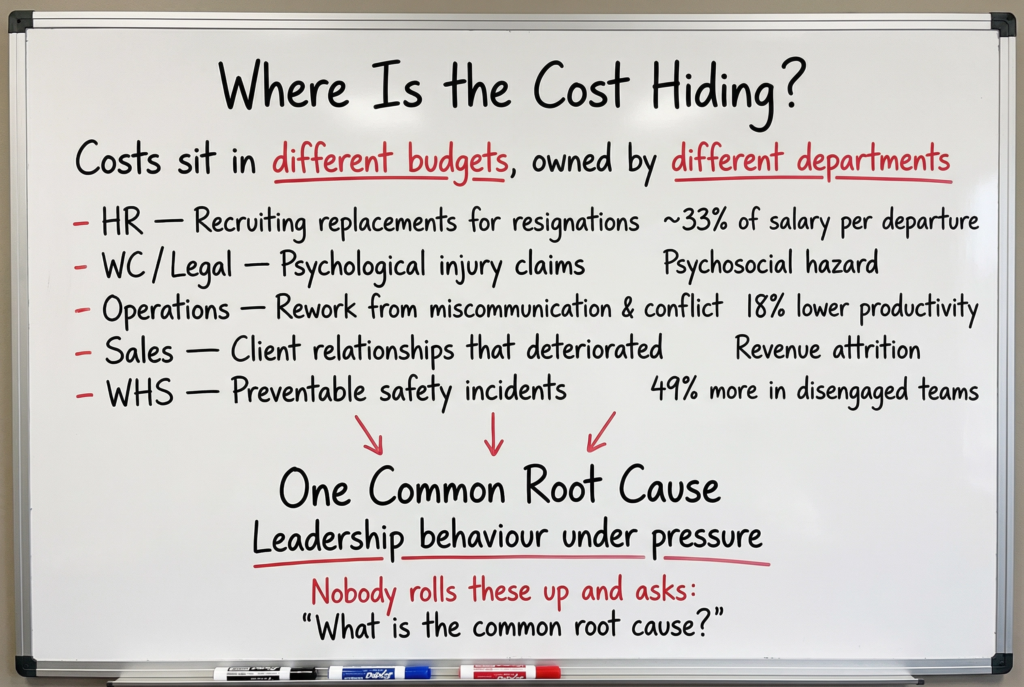
Under Safe Work Australia’s model Code of Practice for managing psychosocial hazards, organisations have an explicit obligation to identify and manage workplace factors that may cause psychological harm.
Poor leadership behaviours – including bullying, unreasonable management practices, lack of support, and poor communication – are specifically listed as psychosocial hazards. This isn’t about intent. A leader can have the best intentions and still create a psychologically unsafe environment through reactive, unconscious behaviour patterns.
Key points for boards and senior leaders:
Leadership behaviour is now a workplace health and safety issue, not just a development issue. A one-day workshop does not meet the regulatory standard for managing psychosocial hazards. Organisations need sustained, embedded behavioural change – not event-based training. Boards and executives have a duty of due diligence to ensure psychosocial risks are identified, assessed, and controlled.
Shiftcode™ is designed to sit at the intersection of leadership development and risk management. It provides:
A diagnostic framework (The Quadrants) that gives leaders and organisations a common language for identifying avoidant and reactive behavioural patterns – moving beyond vague concepts like “culture” to specific, observable behaviours.
A navigation system (The Compass) that equips leaders with practical tools to shift from avoidant and reactive to intentional behaviour in real-time – reducing the frequency and impact of harmful leadership moments.
An embedded methodology that can be scaled across an organisation’s leadership cohort – creating consistent behavioural expectations and a shared toolkit for intentional leadership at every level.
A measurable approach through 90-Day Shift Plans and post-program assessments that demonstrate proactive investment in psychosocial risk management.
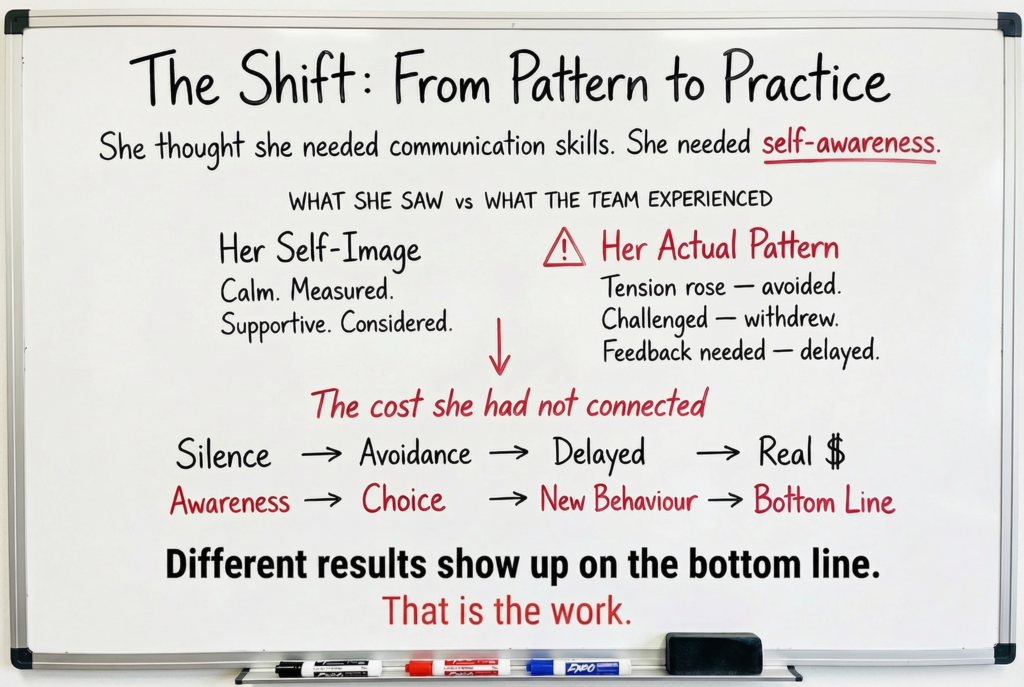
Whether you’re a CEO, HR Director, or board member looking to strengthen your organisation’s approach to behavioural risk, we’d welcome a conversation. Let’s calculate the millions you’re leaving on the table as a result of behavioural risk.